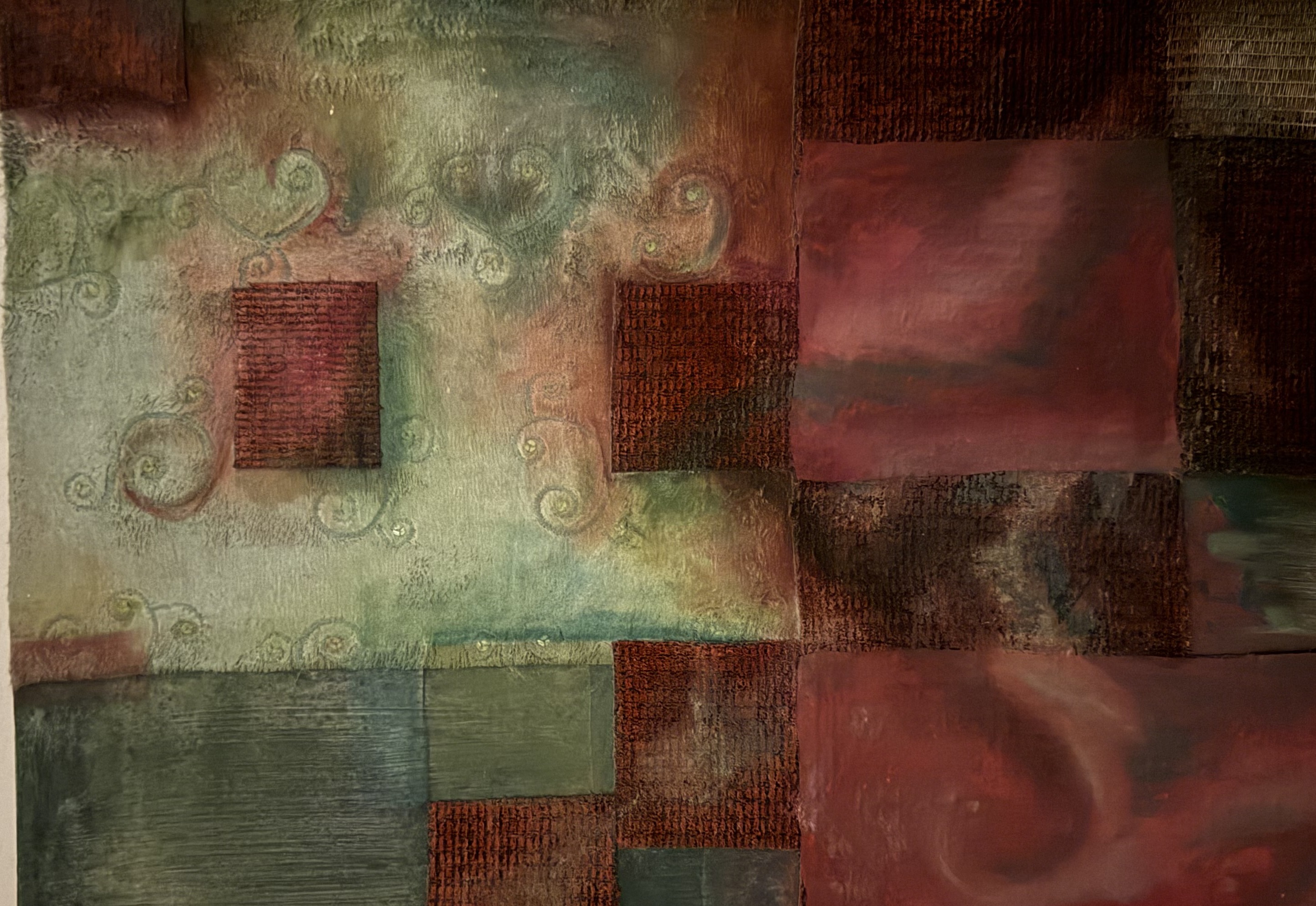
Why this page is on a product profile → the way you learn to see in a studio is the same way you learn to see a system. Composition, restraint, what to leave out. It carries.
I studied studio art at Colby. I don't pick up a brush as often as I used to, but the practice still shows up in the way I think about composition, restraint, and which thing in a frame gets to be loud — and it follows me into product work whether I'm asking it to or not. The palette of this whole site comes from these.
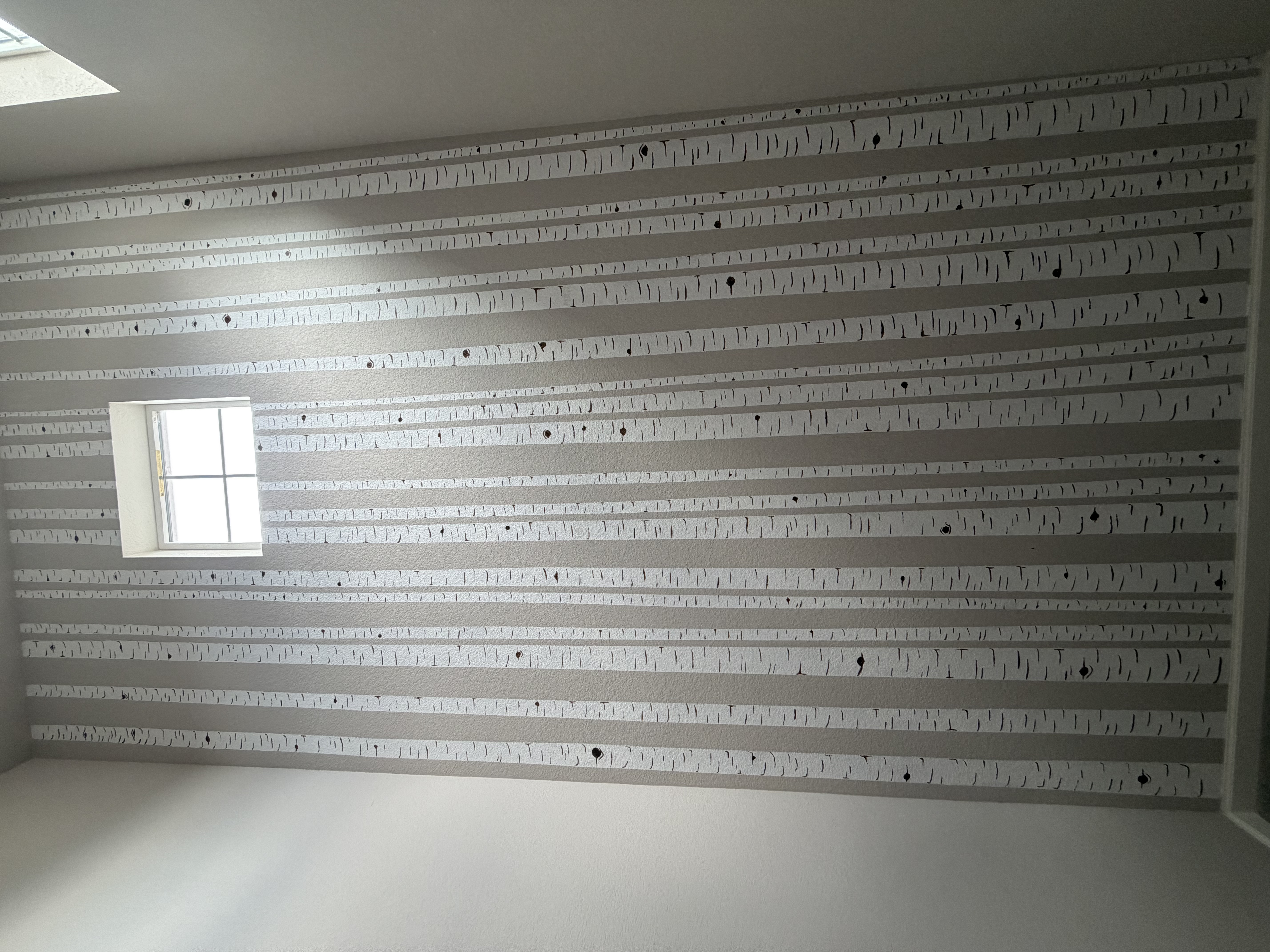
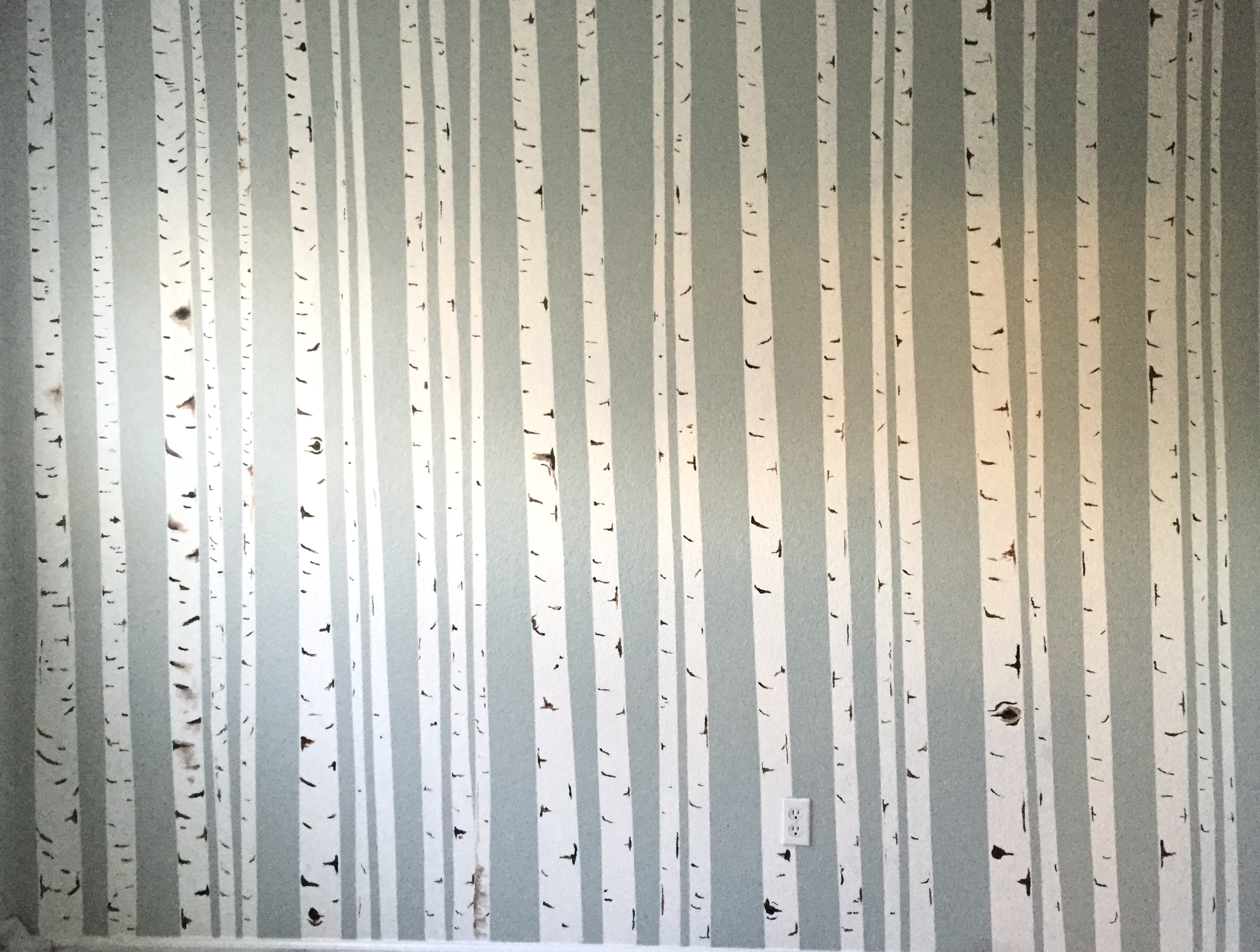
The third — and largest — mural in the series, and the one that lives in our current home. A two-story stairwell, wall to ceiling, turned into a stand of Colorado aspens. Acrylic on top of wall paint. Brush only, no projector, no template.
The wall is the background. The cool gray plaster is the negative space — the air between trees — and stays untouched. Every white trunk is painted on top of it, then every dark bark mark goes on top of the white. The composition had to be decided before a single brush touched the wall: pencil layout, masking, step back, repeat.
Two stories of scaffolding, one stubbornly small window I had to paint around, and the kind of arm-fatigue you only really earn from painting over your head all weekend. Worth it.
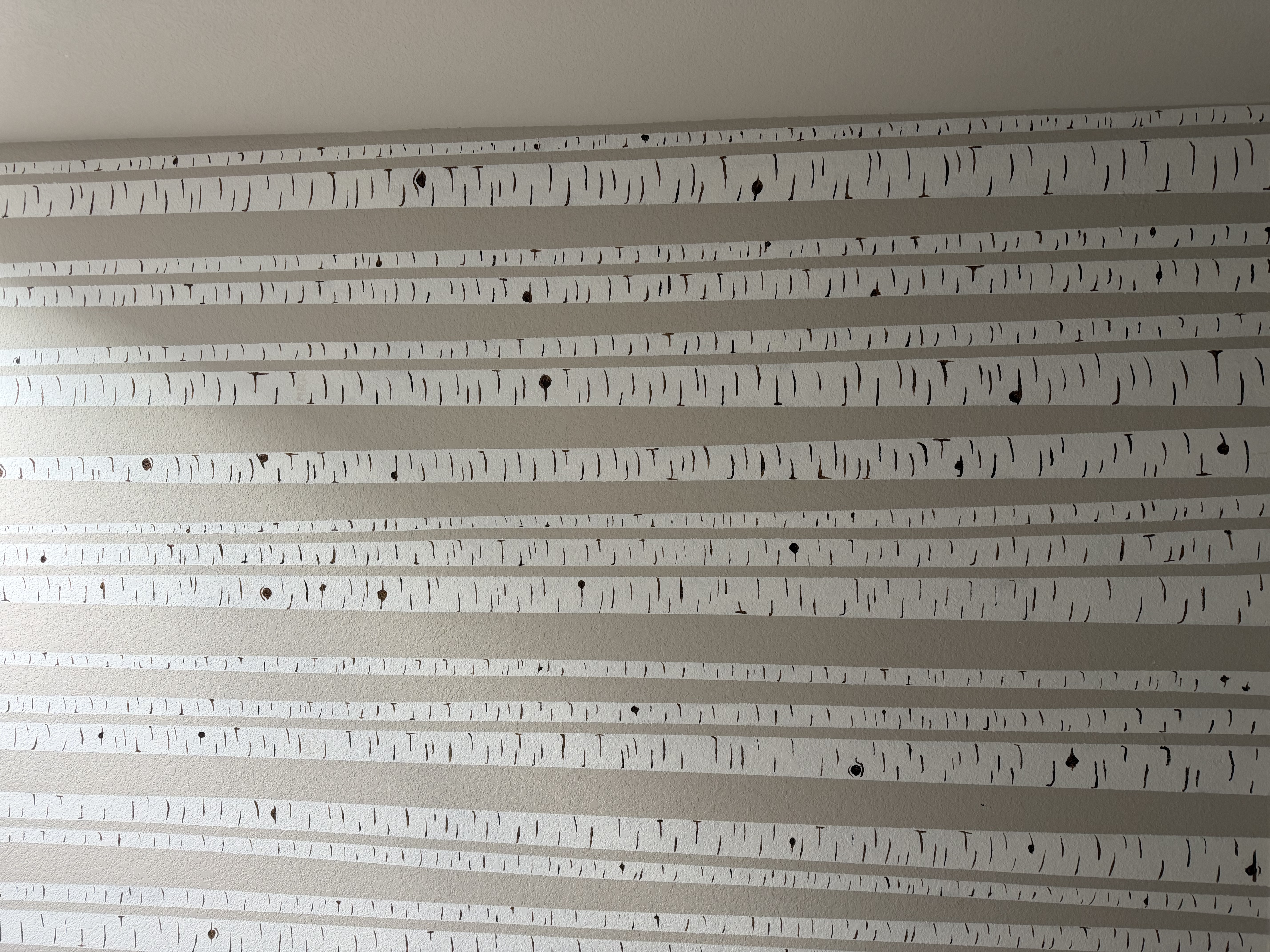
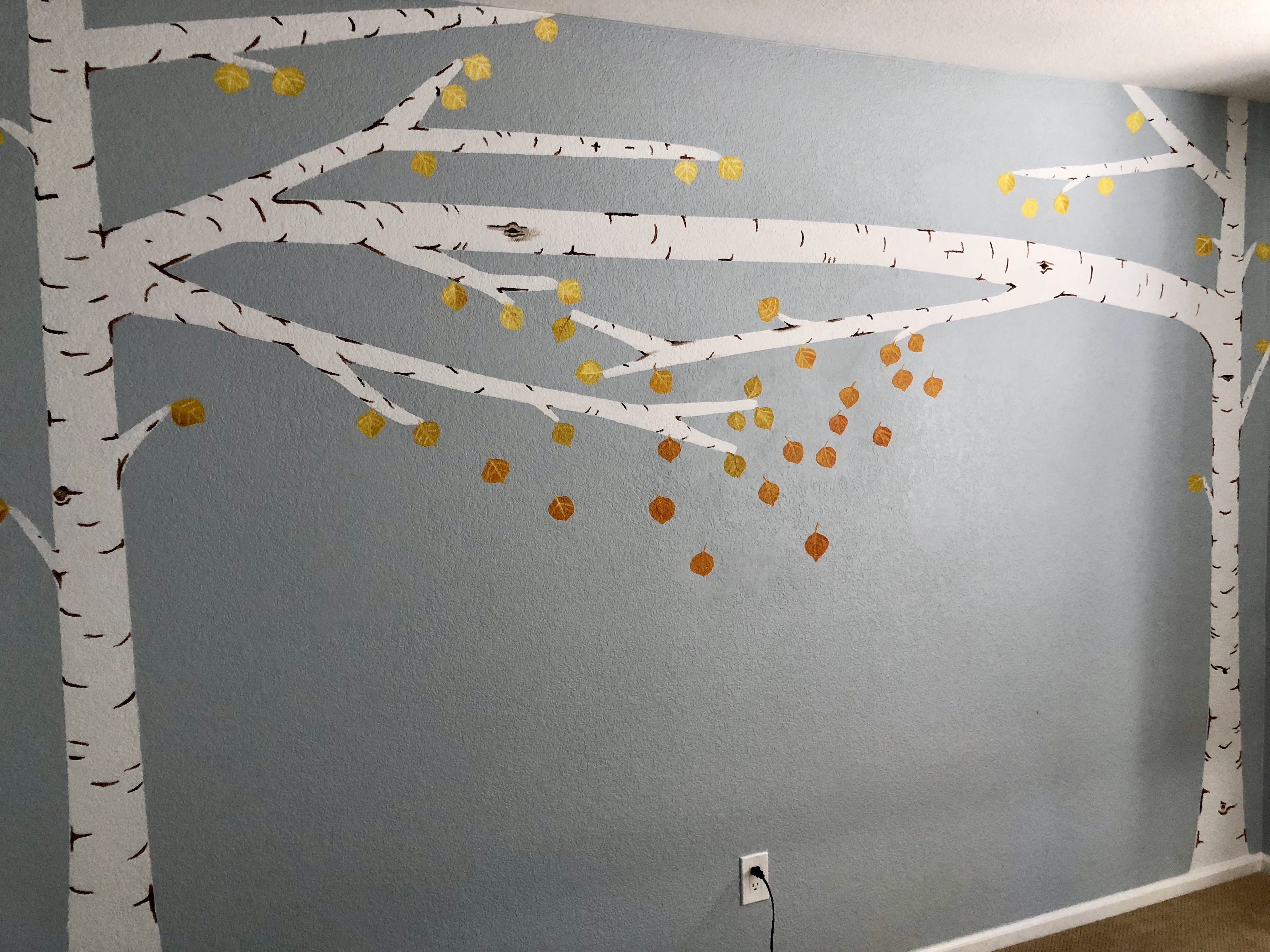
The first two were my daughters' bedrooms in our last house — same aspen idea, worked out two different ways. The stairwell forest was the third pass at the theme, and by then the technique had figured itself out.
Three rooms, one tree. The Colorado aspen keeps finding its way back onto every wall I own.
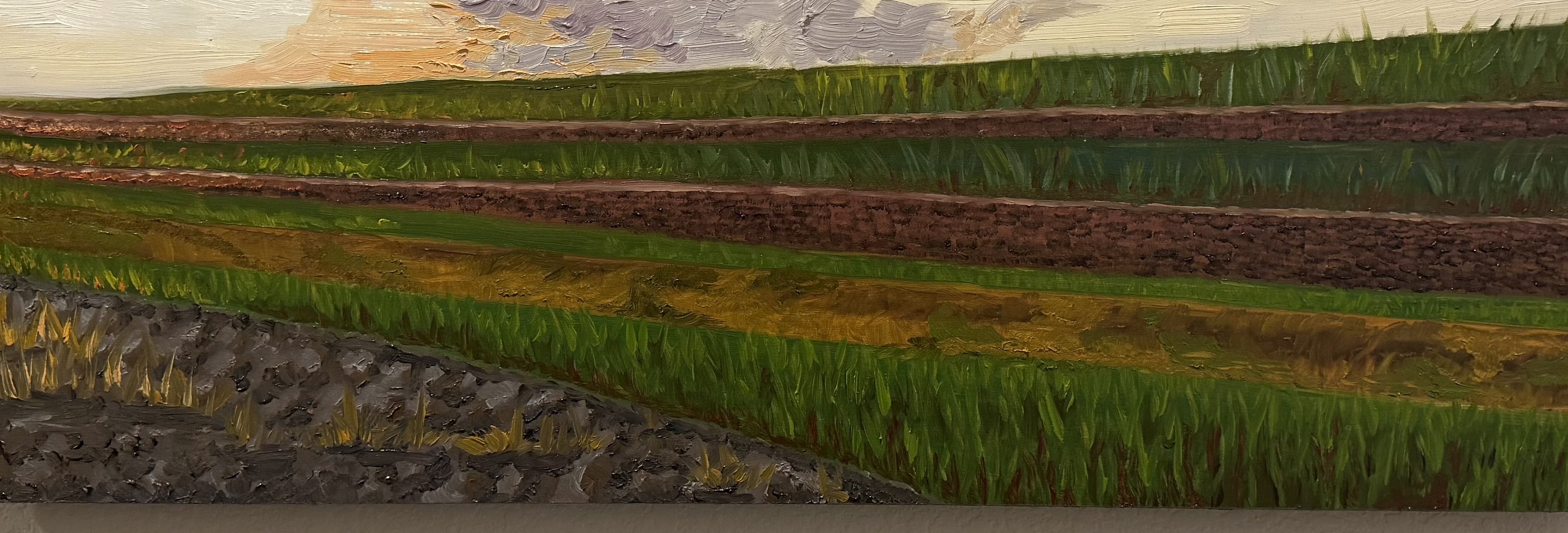
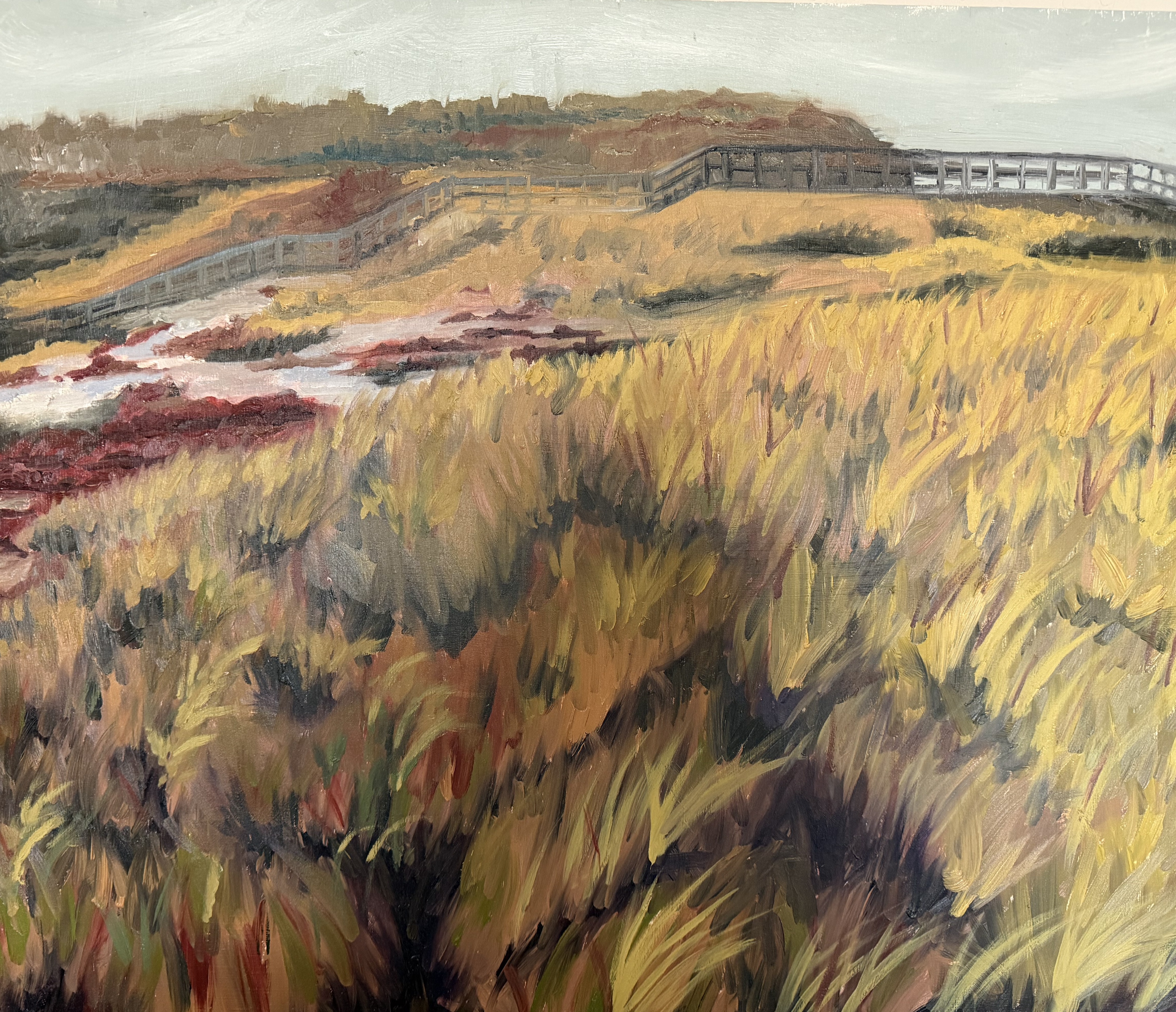
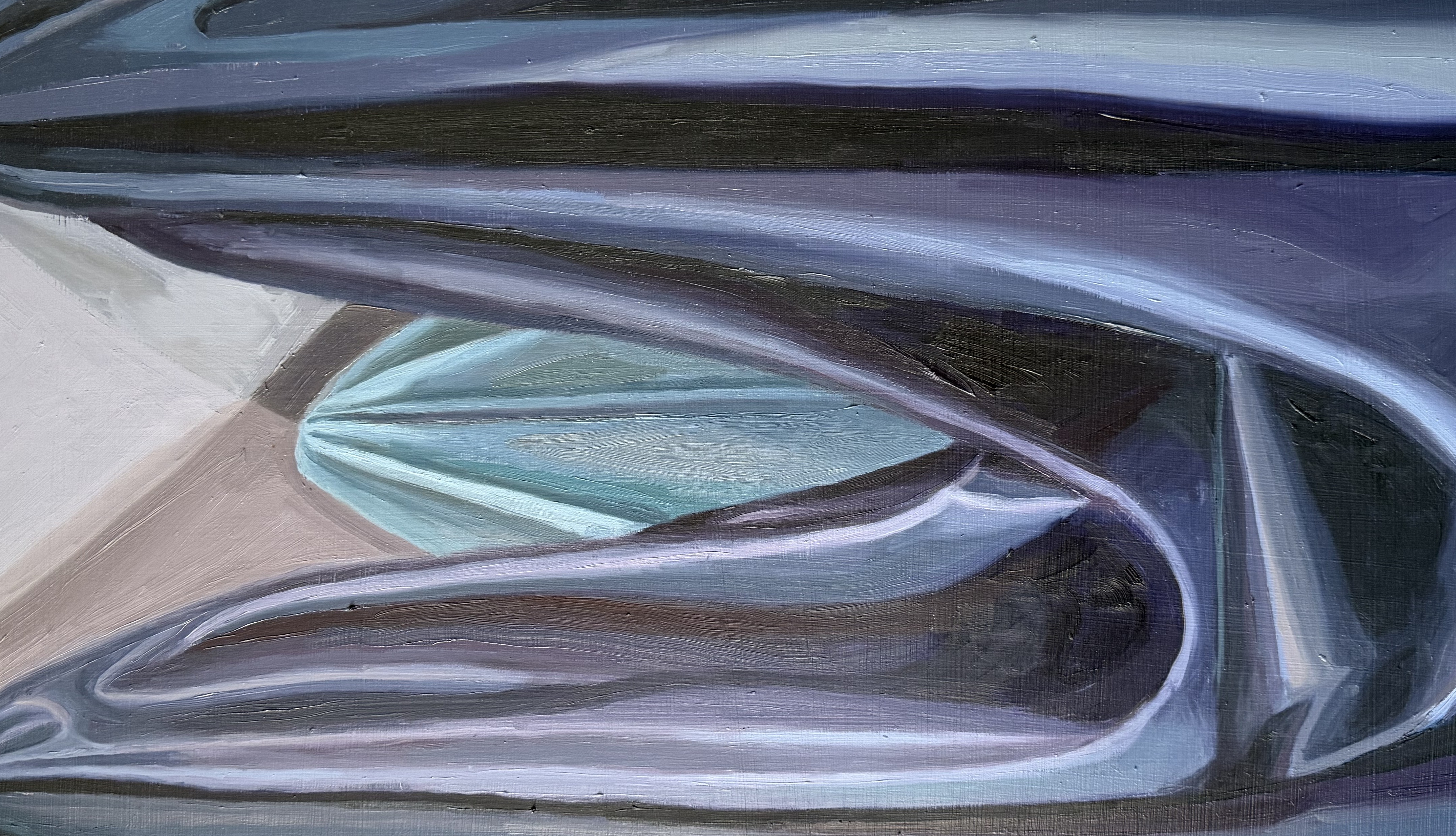
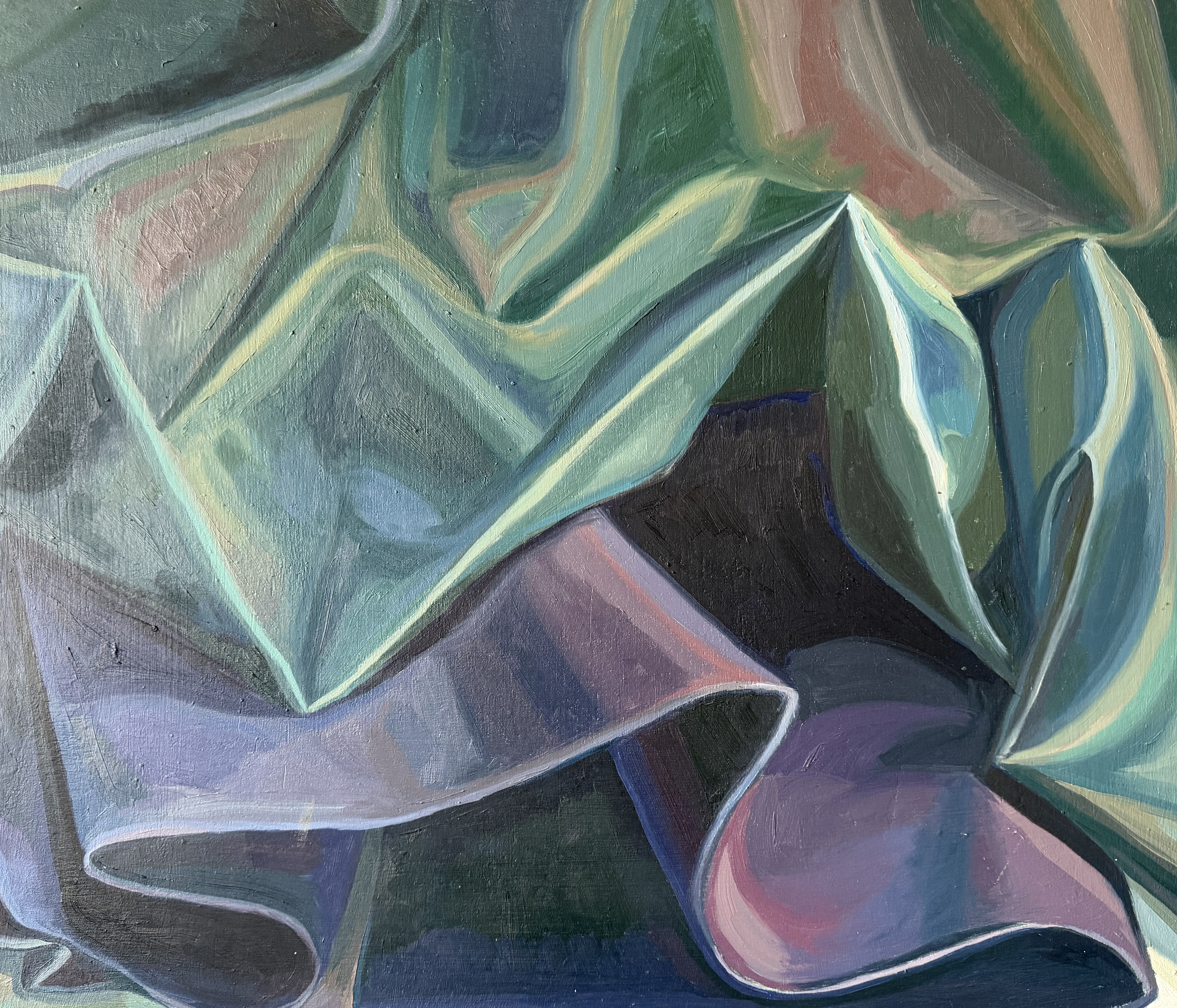
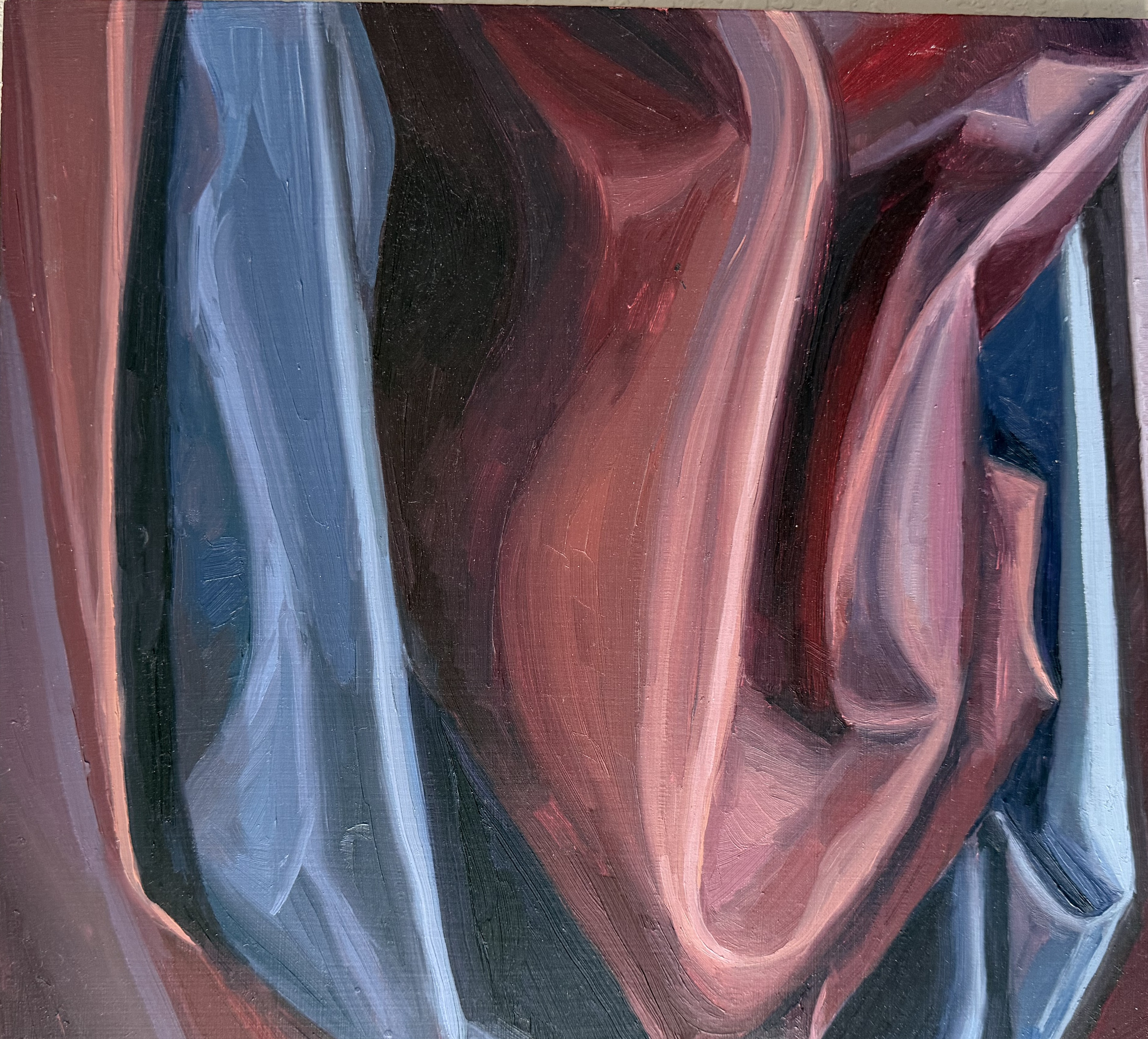
Two landscapes painted recently. A fabric series from over a decade ago: three drape studies that grew into each other, and an early mixed-media piece that started the obsession with color, texture, and fabric.
A painting is a thousand decisions about what to leave out.
These pieces are mostly from the years I was still painting regularly. The medium is far less present in my life now — the days fill with other things — but the way you learn to see in a studio doesn't really go away. You learn to look hard at what's actually there before you decide what to do about it. You learn that the loud thing in the frame is loud because everything around it agreed to be quiet. You learn that "more" is almost never the answer.
That stays with me when I'm prioritizing a roadmap, or sitting in a problem-definition meeting trying to figure out whether we're solving the right thing. So while I don't lead with the painting anymore, I'd be a different kind of PM without it.